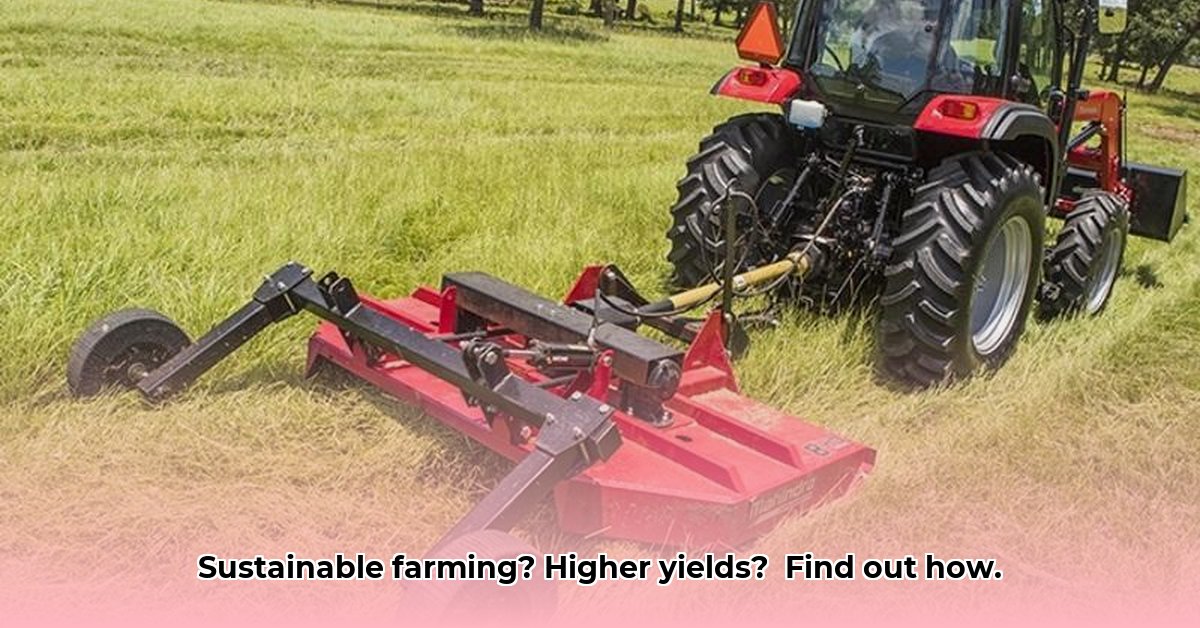
Farming faces a critical challenge: producing more food while minimizing environmental impact. Tractor attachments—the tools attached to your tractor—play a pivotal role in achieving this balance. This guide explores how to leverage these implements for sustainable agriculture, offering actionable advice for farmers of all sizes, manufacturers, and policymakers. We'll delve into the environmental implications of various attachments, providing a practical roadmap toward a more sustainable and productive future. For specific examples of effective attachments, check out this helpful resource.
Tractor Implements: Optimizing Yields and Environmental Stewardship
Sustainable agriculture hinges on efficient resource utilization and reduced environmental impact. Tractor implements are not simply machines; they are tools that significantly shape a farm's environmental footprint and economic viability. Selecting appropriate implements is crucial for achieving both bountiful harvests and environmental responsibility.
The Diversity of Tractor Implements: Tools for Sustainable Farming
The array of tractor attachments is remarkably diverse, each tailored for a specific task. Planters precisely sow seeds, guaranteeing optimal germination. Tillers aerate and loosen soil, fostering healthy root systems. Harvesters efficiently gather crops, minimizing waste and maximizing yield. The appropriate implement significantly enhances efficiency and reduces resource demands. But the choice is crucial; choosing the wrong implement can negate much of the potential benefit.
Balancing Act: Environmental Impacts of Tractor Implements
While crucial for efficient farming, tractor implements have both positive and negative environmental consequences. Understanding this balance is paramount for developing sustainable practices.
Environmental Benefits of Sustainable Implement Use:
- Fuel Efficiency: Modern implements, when used correctly, often reduce fuel consumption per unit of produce, lowering greenhouse gas emissions. Think reduced carbon footprint and financial savings.
- Precision Farming: GPS-guided implements enable precision planting, spraying, and fertilization, minimizing resource waste (water, fertilizers, pesticides), thus protecting soil and water quality.
- Reduced Labor: Automation reduces manual labor, saving time and energy.
Potential Environmental Drawbacks:
- Manufacturing Impact: The manufacturing process itself consumes energy and resources, contributing to emissions and material depletion. The embodied energy (energy used during manufacturing) of some components is considerable.
- Material Sourcing: The materials used in manufacturing – their sourcing, processing, and transportation – all contribute to the overall environmental footprint.
- Soil Compaction: Heavy machinery can compact the soil, hindering water infiltration, root growth, and overall soil health. This is a significant concern in many agricultural systems.
Actionable Strategies for Sustainable Implement Use
The pathway to sustainable agriculture requires collaborative efforts from various stakeholders. Here's a breakdown of actionable steps:
For Farmers (Large & Small Scale):
- Assess Your Needs: Before purchasing an implement, meticulously evaluate your farm's specific needs, crop types, and acreage. Avoid unnecessary investments—this is equally important for environmental and financial sustainability.
- Prioritize Fuel Efficiency: Choose fuel-efficient models and adopt smart operational practices. Proper maintenance and efficient driving habits significantly impact fuel consumption.
- Embrace Precision Technology: GPS-guided systems promote targeted resource application, minimizing waste and maximizing efficiency. The investment often pays for itself over time.
- Regular Maintenance: Proper maintenance extends implement lifespan, reducing the need for replacements and lowering the associated environmental impact.
For Manufacturers:
- Sustainable Materials: Prioritize recycled and renewable materials in designs, reducing the embodied energy of your products and minimizing waste.
- Efficient Manufacturing: Optimize manufacturing processes to minimize energy consumption and waste generation.
- Lifecycle Assessments: Conduct comprehensive lifecycle assessments to thoroughly evaluate the environmental impact of your implements, from raw materials to disposal.
For Government Agencies & Researchers:
- Invest in Research & Development: Fund research focused on developing sustainable implement designs and farming practices.
- Incentivize Sustainability: Implement policies, such as subsidies or tax breaks, to encourage the adoption of environmentally sound technologies.
- Promote Education and Awareness: Invest in educational programs to inform farmers about sustainable implement usage and best practices.
Case Studies: Proven Successes in Sustainable Implement Use
(This section would showcase real-world examples of farms successfully utilizing sustainable implements, quantifying the positive outcomes – reduced emissions, improved soil health, increased yields with lower resource consumption. Specific data and farm details would illustrate the tangible benefits.)
Conclusion: A Path Towards a Sustainable Agricultural Future
Sustainable agriculture is not merely a trend; it's a necessity for long-term food security and environmental preservation. By making informed choices and adopting innovative technologies, we can cultivate bountiful harvests while protecting our planet. The future of farming lies in this balance—growing more, while growing better.